- Region and Language

Fleet management is defined as the process of managing and optimizing a company’s vehicles to improve efficiency and control costs. It supports business operations by reducing administrative burden, optimizing routes, scheduling maintenance, and monitoring and supporting drivers.
As businesses grow, managing fleet vehicles becomes more complicated and difficult to control without the right structure in place. This is where a fleet management company helps your business scale through expertise and advanced tools. When you turn fleet data into actionable insights, you can reduce costs and stay ahead of maintenance issues.
Fleet management works by helping you manage your vehicles across their full lifecycle, from acquisition to sale (remarketing). It starts with choosing vehicles that match your business needs and supports your operations as your fleet grows. As vehicles age, you can decide when to replace or resell them based on performance and cost.
Fleet management solutions are tailored for every stage of your fleet lifecycle. By hiring a team of fleet experts, your business gains access to valuable industry expertise and practical insights. Here are some of the key solutions a fleet management company offers:
Vehicle procurement is the first stage of the fleet lifecycle. Fleet management experts review your needs and build a plan that fits your fleet. Through clear planning from initial build to final delivery, you gain full visibility at every stage of the process.
Financing is an important stage of the fleet lifecycle and requires careful planning. You get flexible leasing and financing options to help optimize costs. With access to an extensive dealer network and detailed cost analysis, the right fleet partner also helps reduce your total cost of ownership.
Title and registration management is time-consuming and diverts attention from tasks needed to support your business objectives. A reliable fleet management company removes this burden with strategies that keep your fleet operational and compliant across every state.
Total cost of ownership (TCO) represents the full lifecycle cost of a vehicle, including acquisition, operation, and eventual resale. The right fleet service partner can build a clear financial plan supported by cost analysis to identify hidden expenses and improve how your fleet is used over time.
Fuel is one of the largest operating expenses in fleet management, accounting for about 30–35% of total costs based on our internal data. By monitoring consumption and refining fueling strategies, you can reduce costs and improve efficiency.
Modern fleet solutions also bring fuel and payment management together through advanced tools that simplify how drivers pay. Beyond fuel cards, vehicles can also act as the payment instrument, enabling secure, vehicle-based transactions. This approach improves control on spending and reduces administrative work while providing real-time visibility into fuel and other fleet expenses.
Preventative maintenance keeps vehicles on the road and minimizes downtime from unexpected repairs. Fleet managers schedule regular servicing, monitor vehicle health, and handle repairs as needed. This helps extend vehicle lifespan while controlling maintenance costs.
Accidents can impact both immediate costs and long-term operations by increasing expenses and reducing productivity. The direct effects include vehicle repairs, insurance deductibles, and medical expenses for injured parties. Fleet experts help control these costs through quicker claims and access to trusted repair networks.
Driver management is an essential part of fleet management. It involves background checks, recruitment, training, and performance monitoring, all of which play a vital role in ensuring operational efficiency and safety. These practices also promote driver satisfaction and retention, helping business operations run smoothly and consistently.
Modern fleet tools enhance driver connectivity and support through mobile tools that simplify day-to-day tasks. Drivers can access vehicle information, report mileage and incidents, receive maintenance reminders, and locate approved fuel and service providers from a single platform.
Fleet electrification lowers operating costs by reducing fuel use and maintenance, as electric vehicles require less servicing than traditional vehicles. With government rebates and manufacturer incentives, your total cost of ownership may also decrease. At the same time, it helps you stay compliant with emissions regulations like CAFE and ACCII. Electric vehicles also include safety features like ADAS and telematics, and with expert support, you can plan a smooth transition for your fleet.
EV charging is essential to keep electric fleets efficient. Charging requirements depend on how vehicles are used, where they are located, and how long they are idle. It keeps vehicles ready to go while reducing costs and simplifying operations.
Compliance and risk management are essential for fleets to operate at their full potential. Fleet experts support this through proactive safety measures, including driver training to ensure drivers are well-prepared to reduce risk.
Fleet management has evolved significantly over the past decade. Today, you can stay connected to your fleet through real-time data and personalized dashboards that turn information into actionable insights. Fleet experts use telematics to optimize routes, reduce fuel and energy consumption, and monitor driving behavior to keep operations running smoothly.
A sale leaseback, also called buy leaseback, is a simple way to turn the value of your vehicles into cash you can use. You sell your fleet vehicles and then lease them back through a plan that is designed around your business needs. You can also include services like telematics, maintenance, accident management, and fuel programs to get more value out of the setup. Fleet financing experts facilitate this process without causing any disruptions in your business operations.
As vehicles reach the end of their lifecycle, timing becomes important to protect value and control costs. Replacing or selling too early or too late can impact both resale returns and ongoing expenses. Vehicle remarketing experts support this process by preparing vehicles for sale and managing remarketing through established auction networks. This approach not only reduces the administrative burden on your team, but also allows you to maximize your returns.
Your fleet is a major driver of business performance, so every decision counts. Strategic advisory services provide a data-backed approach to help you improve performance, control costs, and plan with more clarity.
By analyzing fleet data, benchmarking against industry standards, and considering market trends, we help you make more informed decisions. Strategic advisors provide tailored recommendations and ongoing support to help you stay aligned with your goals as your needs evolve, backed by Element’s deep fleet expertise.
Running a fleet can quickly become time-consuming, pulling focus away from your core business. Without the right support, it becomes harder to stay organized and keep things running efficiently.
Client Success teams help take that pressure off by becoming an extension of your business. With centralized client support and clear visibility through reporting, alerts, and exception management, you can stay ahead of issues instead of reacting to them. Lifecycle vehicle support, including acquisition, registration, and remarketing, helps keep your fleet organized and moving without added complexity.
As businesses grow, there comes a point when managing everything in-house is no longer sustainable. At the same time, economic shifts and rising costs make it harder to plan, leaving business leaders reacting instead. With the right fleet support, managing vehicles becomes one less thing to worry about.
Fleet management experts help you take control of your fleet with solutions tailored to your needs. They support you through every stage of your fleet, including vehicle financing, maintenance management, fuel management, registration renewal, reporting, and vehicle remarketing. Element Fleet Essentials does exactly that, bringing everything together into one simple program that makes fleet management easier.
Without a structured approach to fleet management, costs can rise quickly and become harder to control. Vehicle prices continue to increase, with average new vehicle transaction prices exceeding $50,000 (opens in a new tab), which drives up financing costs from day one. At the same time, maintenance costs are climbing, and insurance premiums have risen sharply in recent years. When these costs increase together, total cost of ownership grows fast.
Working with a fleet management partner brings structure and control to these challenges. With Element, you gain the scale and expertise to turn complexity into measurable results. With over 1.5 million vehicles under management and more than $1.6 billion in client savings identified, you have the support to reduce costs and keep your fleet moving forward.
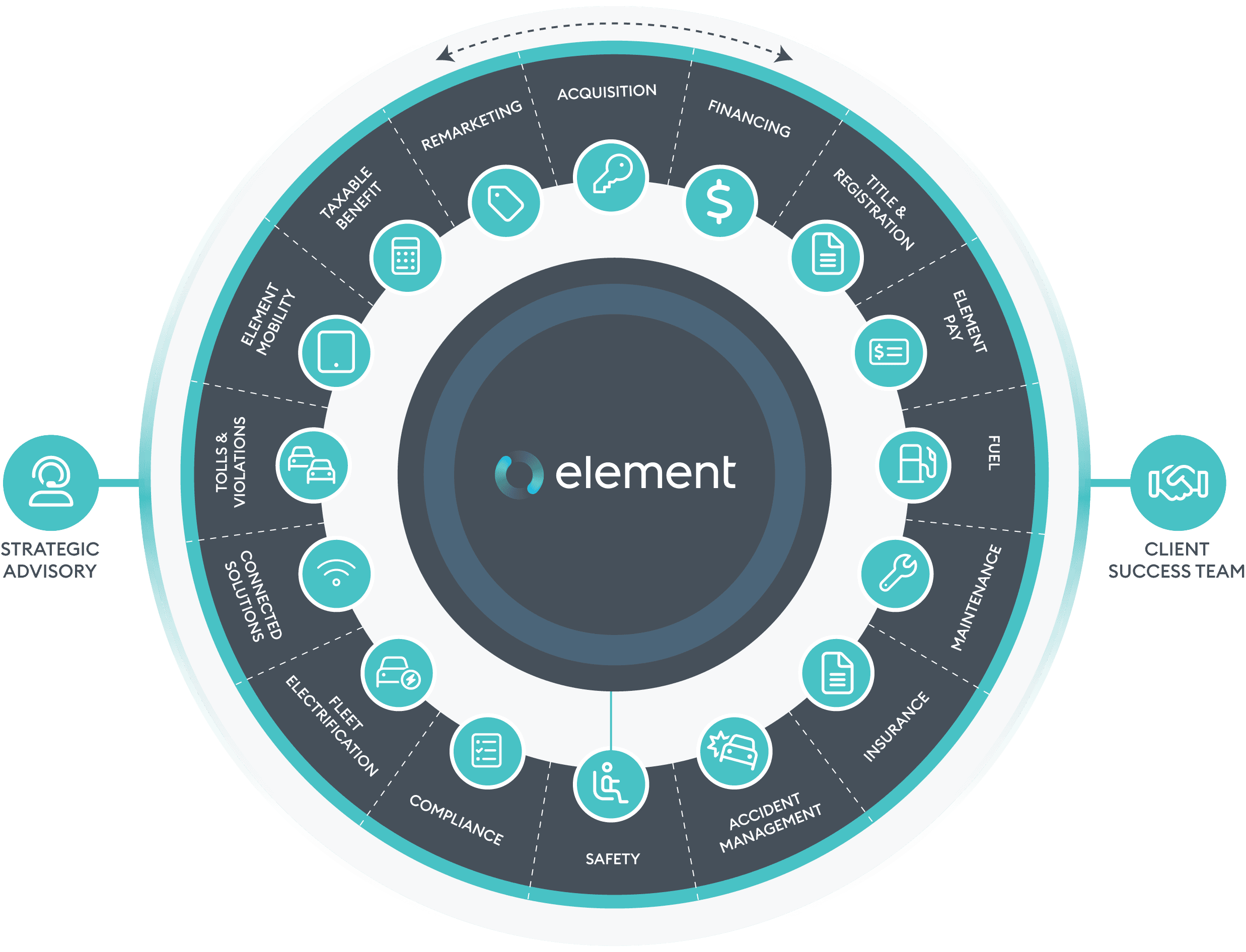
Fleet management companies support you across the full lifecycle of your vehicles. This typically includes vehicle acquisition and financing, maintenance and repairs, driver management, fuel tracking, compliance support, fleet electrification, and vehicle remarketing.
They also provide access to data and insights that help you understand how your fleet is performing. With the right partner, you can make more informed decisions, reduce costs, and keep your operations running smoothly.
The best fleet management company depends on your business size, industry, and operational needs. That said, leading providers combine scale, technology, and advisory expertise to help you improve performance across your fleet.
Element Fleet Management is one of the largest providers in North America, offering end-to-end solutions backed by data and industry expertise.
Through Element Mobility, the company continues to invest in advanced technologies that support more efficient and connected operations.
Autofleet, part of Element Mobility, is a strong example of this innovation. It was recognized as the “Fleet Management Solution of the Year” by AutoTech Breakthrough, highlighting its role in advancing data-driven fleet operations. Its AI-powered platform helps fleet operators improve utilization, reduce costs, and manage daily operations with greater accuracy.
As fleet technology continues to evolve, working with a provider that combines experience with innovation can help you stay competitive and adapt to changing demands.
In simple terms, fleet management helps you keep your vehicles running efficiently and your operations on track. It focuses on maintenance, compliance, performance, and cost control so you can avoid issues before they impact your business.
A comprehensive fleet management system helps you gain better visibility into your operations and take control of day-to-day decisions.
With access to real-time data, you can improve efficiency, reduce fuel usage, manage charging needs, and stay ahead of maintenance schedules. It also supports safer driving practices and helps ensure your fleet remains compliant with regulations.
Over time, this leads to more reliable operations and better cost control, which allows you to focus on growing your business.
Choosing the right provider starts with understanding what your business needs today and how those needs may change as you grow. Look for a partner that offers flexible solutions, clear pricing, and technology that is easy to use without adding complexity to your day-to-day operations.
For growing fleets, it also helps to choose a provider that simplifies management instead of adding more systems to manage. Programs like Element Fleet Essentials are designed specifically for small and mid-sized businesses, bringing together services such as financing, maintenance, fuel management, registration, and reporting into one streamlined solution.
This type of approach helps reduce administrative workload, improve cost visibility, and keep your vehicles running efficiently so you can stay focused on your business. As your fleet evolves, working with a partner that can scale with you ensures you are set up for long-term success.