
- Region and Language
For years, fleet vehicle selection followed a familiar pattern. When a vehicle reached the end of its lifecycle, it was often replaced with a similar one.
Well, what if the job has changed?
Adam Orth, US Head of Fleet, SCM Mobility Services at Siemens, and his team began asking that question as they evaluated their service fleet. By seeing how technicians actually used their vehicles in the field, they found that some long-standing assumptions no longer matched the work being done.
Rethink the equipment: A fleet vehicle change does not always require giving up the tools technicians rely on. At Siemens, a folding ladder helped the Chevrolet Equinox replace small vans for some technicians.
Roll out changes gradually: Test new fleet vehicles or upfits with a smaller group first so you can learn what works before expanding the approach.
Plan electric vehicle (EV) adoption: Consider daily mileage, range needs, charging access, and equipment requirements to identify where EVs are most practical for your fleet.
Give technicians flexibility: Avoid filling fleet vehicles with fixed shelving or storage that technicians may not use. Leave some interior space open so they can organize the vehicle around how they work.
In a recent episode of , Adam Orth discussed how input from drivers changed Siemens' approach to vehicle selection and upfitting, and why choosing the best fleet vehicle starts with understanding what the job actually needs.
Siemens was dealing with a practical problem. Its traditional small vans were becoming harder to source, ordering patterns had changed, and OEM vehicle lineups were shifting. At the same time, the work technicians were doing was changing too.
That pushed Adam’s team to look beyond simply replacing each vehicle with the same type. “Historical context had to be thrown out the door,” Adam said.
Instead, Siemens began looking at what the business and customer actually required. That opened the door to different vehicle types, including SUVs, and different upfits rather than automatically recreating the old van setup.
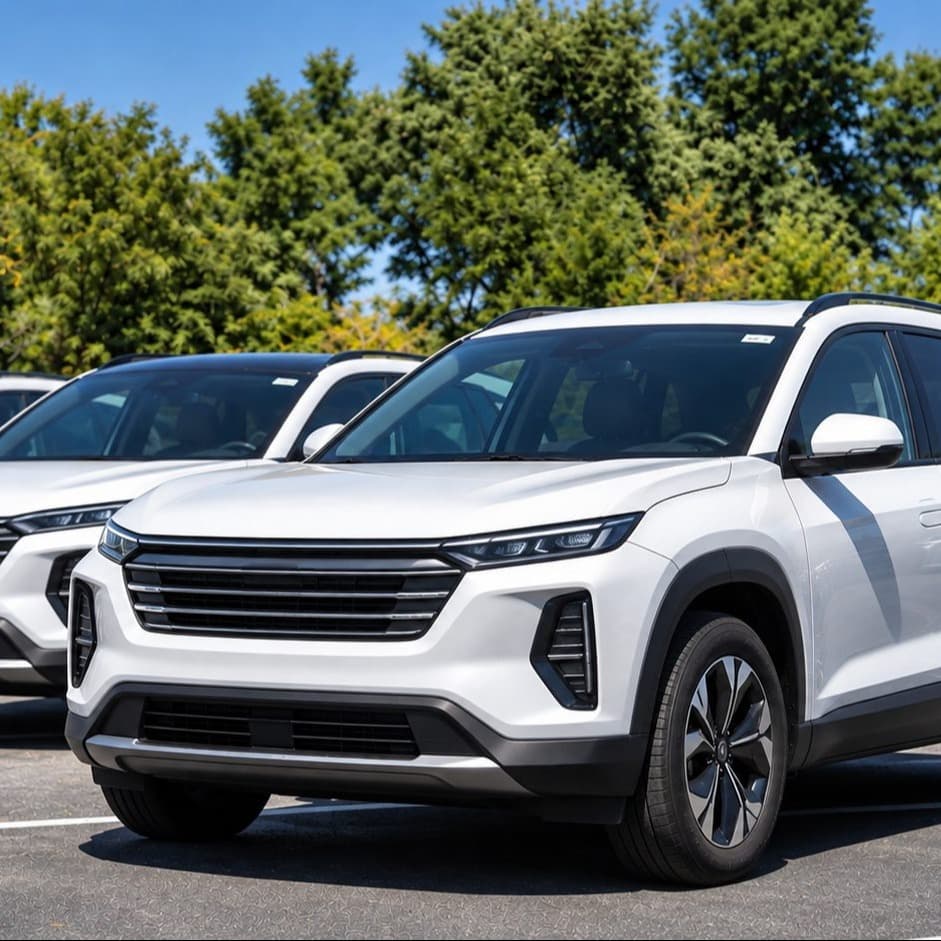
With Siemens' traditional small vans becoming harder to source, Adam's team needed another option. SUVs stood out because vehicles in that size were widely available across manufacturers, giving Siemens more flexibility if it needed to adapt its fleet over time. The team built an upfit for the Equinox and took the vehicle to Siemens locations to see if it could actually replace a van. They emptied vans, weighed what technicians were carrying and, at one location, moved everything from a van into the Equinox.
The team found that some vans were carrying far less than expected. Adam described some as essentially "carrying air ", while in other cases equipment could be shipped directly to the job site instead of being carried every day. That gave Siemens more practical input for vehicle selection and helped determine where a smaller vehicle could make sense. The Equinox also helped prepare Siemens for fleet electrification. The team first introduced ICE Equinoxes with the new upfit, so when the Equinox EV became available, they already knew how the SUV could work for technicians.
Vehicle type was only part of what Siemens reconsidered. The team found that some shelving in traditional vans was either empty or holding items technicians rarely used. For the Chevy Equinox, Siemens kept more of the interior open, giving technicians flexibility to organize the space around how they work.
“It’s their vehicle. They’re in it all the time,” Adam said.
how technicians actually work rather than repeating setups that no longer meet their needs.
As Siemens explored moving technicians into SUVs, one issue kept coming up. Technicians still needed a ladder to do their jobs, but the traditional setup did not fit the new vehicle.
Instead of treating that as a reason the SUV would not work, Siemens changed the equipment. Technicians used a folding ladder that fit inside the Equinox, while those who still needed a ladder rack were matched with larger vehicles.
The same thinking shaped Siemens' . Instead of starting with a specific electric vehicle, the team looked at daily routes, required range, home charging availability and the equipment drivers needed to carry.
That helped Siemens identify where EVs could work and roll them out gradually. The team also considered regions and states where charging infrastructure was already more established and paired that with home charging where possible. As employees began using the fleet vehicles, Siemens continued adjusting vehicle choices and upfits based on their feedback.
A fleet transition does not need to start with a large rollout. Testing a new vehicle or upfit with a smaller group can help uncover what works, what needs to change and where the approach may not fit.
That gives fleet teams a chance to learn before expanding the strategy more broadly and can make future decisions easier to support with real-world experience.
Element’s experience supporting diverse fleets across industries gives us insight into how different vehicles can support different operational needs. to explore the right vehicle strategy for your fleet.