
- Region and Language
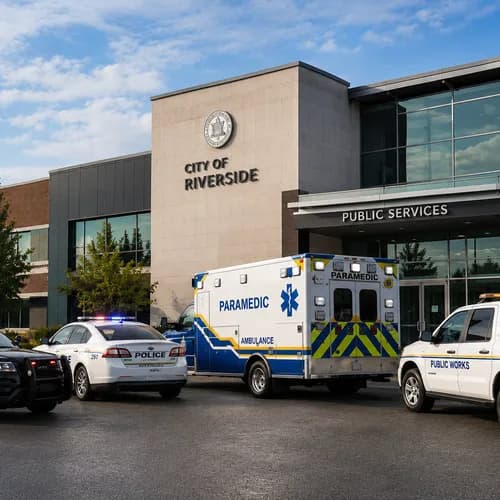
Successful government fleet modernization requires more than new vehicles or technology. It depends on strong collaboration among stakeholders, transparent lifecycle planning, operational expertise, and data-driven decision-making. By aligning fleet managers, procurement teams, finance leaders, and executives around shared objectives, government agencies can reduce costs, improve efficiency, and build future-ready fleet operations without disrupting essential public services.
Modernization starts with collaboration. The most successful government fleet initiatives bring fleet, procurement, finance, and leadership stakeholders together early in the process.
Transparency supports better planning. Clear visibility into lifecycle costs, utilization, replacement schedules, and performance data helps agencies make confident decisions.
Operational expertise is critical. Government fleets have unique requirements, from specialized vehicles and upfitting needs to complex procurement processes and budget cycles.
Data should drive action. The greatest value comes from turning fleet data into practical recommendations that improve efficiency, reduce costs, and support long-term planning.
Modernization starts with collaboration. The most successful government fleet initiatives bring fleet, procurement, finance, and leadership stakeholders together early in the process.
Transparency supports better planning. Clear visibility into lifecycle costs, utilization, replacement schedules, and performance data helps agencies make confident decisions.
Operational expertise is critical. Government fleets have unique requirements, from specialized vehicles and upfitting needs to complex procurement processes and budget cycles.
Data should drive action. The greatest value comes from turning fleet data into practical recommendations that improve efficiency, reduce costs, and support long-term planning.
Running a government fleet today means constantly walking an operational tightrope. Aging assets, rising costs, increasing demands for accountability, evolving sustainability goals, and growing expectations around service delivery are all pressing fleet operations on all sides.
At the same time, many public sector agencies are being asked to modernize. The challenge becomes balancing evolving organizational priorities with the operational realities of managing complex fleets.
Modernization can create significant opportunities, but successful government fleet modernization requires more than new technology. It requires a collaborative approach built on transparency, operational expertise, and a deep understanding of how government fleets actually function.
Government fleets are unlike any other. From municipalities and public works departments to emergency services and transit operations, every public service agency operates within a unique environment shaped by procurement requirements, budget cycles, stakeholder oversight, and specialized vehicle needs.
That's why successful fleet modernization starts with listening.
Before recommending solutions, it's critical to understand an agency's operational requirements, duty cycles, replacement challenges, upfitting needs, and long-term objectives. The most effective fleet strategies are built around the realities of the organization, not around a one-size-fits-all model.
Modernizing a government fleet requires buy-in from multiple stakeholders.
Fleet managers, procurement teams, finance departments, operational leaders, and executive decision-makers all play important roles in the process as decentralization is common and fleets may be managed by multiple different departments under one government. Each group brings different priorities and perspectives.
The earlier stakeholders come together, the easier it is to find solutions that work for the people managing the fleet today and the leaders planning for tomorrow.
Fleet managers, in particular, bring valuable institutional knowledge about vehicle utilization, maintenance requirements, replacement planning, and operational challenges. Their expertise is essential to developing solutions that work in practice.
A collaborative approach helps ensure modernization efforts are practical, sustainable, and capable of delivering measurable results.
Government organizations are accountable to taxpayers, elected officials, and the communities they serve. This means transparency is a must throughout the fleet management process.
Decision-makers need visibility into lifecycle costs, replacement planning, utilization trends, and opportunities for operational improvement. They need clear information that supports budget discussions and helps justify investments.
This is especially important as agencies evaluate new technologies and fleet strategies. Whether considering alternative fuel vehicles, electrification initiatives, programs, or lifecycle management improvements, leaders need confidence that recommendations are supported by data and aligned with organizational goals.
Transparent reporting, benchmarking, and total cost of ownership analysis can help agencies understand not only where they are today, but also where opportunities exist for future improvement.
When stakeholders have access to clear, actionable information, they can make decisions with greater confidence.
Fleet modernization is both a strategic and operational exercise.
Government fleets often include highly specialized vehicles with complex upfitting requirements and unique duty cycles. Public works vehicles, utility trucks, enforcement units, and emergency response vehicles all have distinct operational considerations.
Successfully managing these assets requires an understanding of procurement timelines, vehicle specifications, maintenance requirements, replacement schedules, and implementation planning.
It also requires the ability to anticipate challenges before they become disruptions.
A modernization strategy is only successful if it can be implemented effectively. That's why operational expertise remains one of the most important components of any government fleet partnership.
Organizations benefit from working with advisors who understand both the strategic objectives of modernization and the day-to-day realities of public sector fleet operations.
Government fleets are collecting more data than ever before. The challenge is turning that data into meaningful action.
Telematics, maintenance records, data, utilization reports, and lifecycle analytics can provide valuable insights. However, without the right expertise and context, it can be difficult to identify what information matters most.
Data should support decision-making, not create additional administrative burden.
Effective fleet management partners help agencies translate data into practical recommendations. This can include identifying right-sizing opportunities, optimizing replacement schedules, reducing operating costs, improving vehicle utilization, and supporting long-term planning initiatives.
When data is paired with operational expertise, agencies can make more informed decisions and achieve stronger outcomes.
Government fleet modernization is not a single project or procurement event. It's an ongoing journey that requires trust, collaboration, and a shared commitment to long-term success.
The most successful outcomes occur when public sector agencies have a partner that works alongside them. One that understands their operational realities, engages stakeholders across the organization, and provides the transparency needed to support informed decision-making.
By combining strategic guidance with deep public-sector expertise, government organizations can modernize with confidence, improve lifecycle visibility, manage costs more effectively, and position their fleets to meet future demands.
Because successful modernization isn't just about changing fleets. It's about helping the people who manage them achieve better outcomes for the communities they serve.
To find out more about how Element helps public sector fleets modernize, today.